


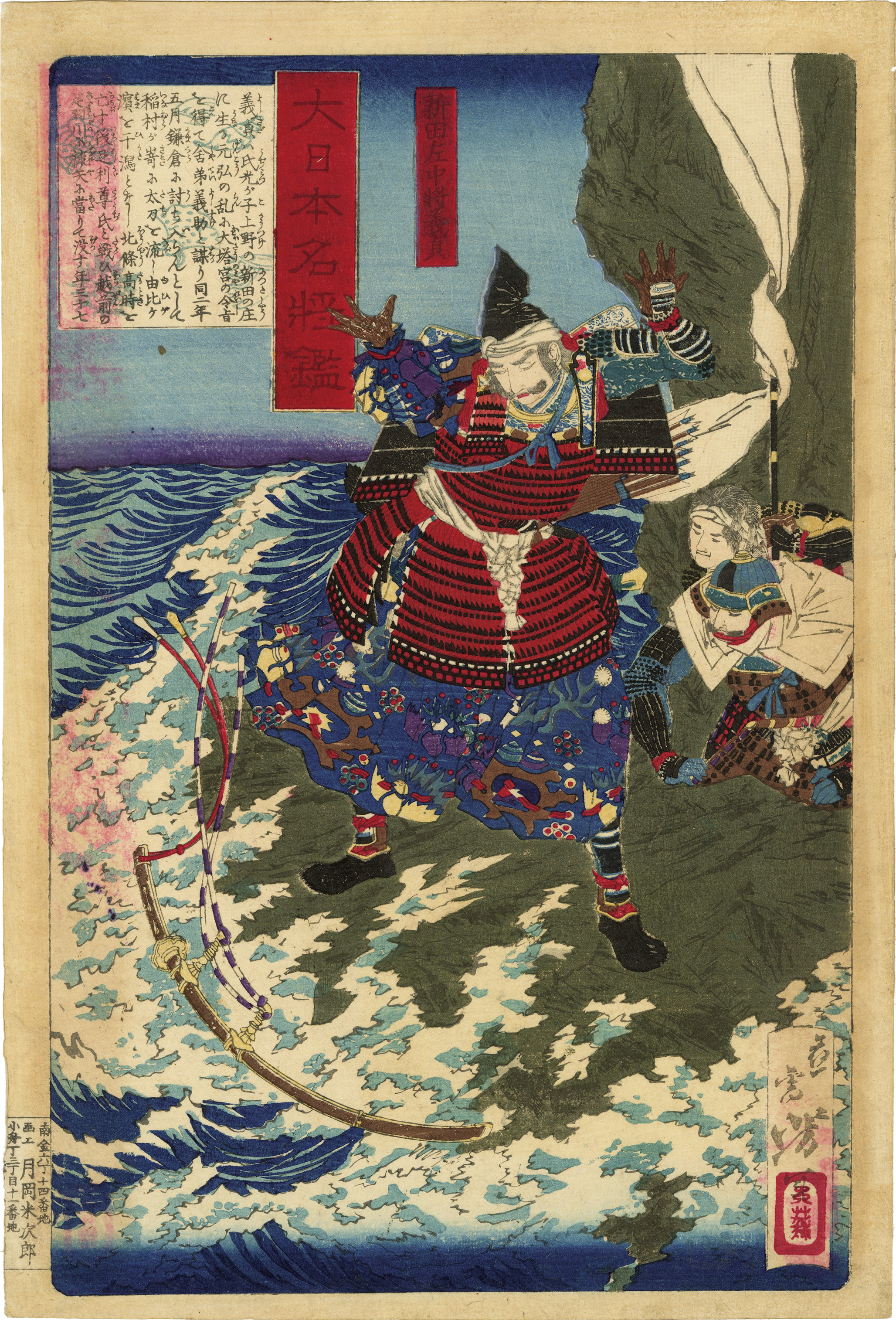

芳年 / 大日本名将鑑 新田左中将義貞
SKU: C24122
スマートフォンのお客様は画像上でダブルタップすると拡大画像をご覧いただけます。
Please double-tap on the image to zoom up images.
作品
年代 : -
サイズ : 大判
刷 : 良
保存 : 良
詳細 : 少シミ / 少汚れ
ディレクターコメント
後醍醐天皇の命により、新田義貞は鎌倉幕府滅亡に向けて進軍していた。その新田のある伝説を描いたのがこちらの作品。金の太刀を龍神に奉じている一場面である。鎌倉は三方を山、一方を海に囲まれた難攻不落の地であり、攻め入る新田も苦戦を強いられていた。伝説では、新田が太刀を奉じるとたちまち海が干上がり陸路が姿を現して、見事鎌倉に攻め入ることに成功したとある。一説によるとこれは干潮の時期を見計らった新田の一芝居で、兵士を鼓舞し力を与えるためであったのではないかと考えられている。
大日本名将鑑は、「天照大神」に始まり江戸幕府三代将軍「徳川家光」まで、神話や歴史上の偉人・英雄51人を通史的に描いた武者絵の傑作である。
芳年(天保10 - 明治25年)は、幕末から明治前期にかけて活動した浮世絵師。
多種多様な浮世絵を手がけ、各分野において独特の画風を見せる。明治期において最も成功した浮世絵師であり、「最後の浮世絵師」と評価されることもある。門下から日本画や洋画で活躍する画家を多く輩出したという側面もある。
また、芳年は芥川龍之介、谷崎潤一郎、三島由紀夫、江戸川乱歩など、文人たちにも愛された。精神を病みながらも創作をつづけた芳年の鬼気迫る情念がこもった究極の美は、世界中で人気が高い。
作品ページの見方とご購入ガイド
Information
Date : -
Size : O-ban
Impression : Good
Condition : Good
Detail : Slight foxing / Slight browning
By order of Emperor Godaigo, Nitta Yoshisada was advancing the army to destroy the Kamakura Shogunate. This work depicts a legend of Nitta, the scene in which he offers a golden sword to the Dragon God, the god of the sea. Kamakura was an impregnable land surrounded by mountains on three sides and the sea on the other, so Nitta faced a hard battle. According to the legend story, as soon as Nitta dedicated his sword, the sea dried up, and a land route appeared, and they successfully attacked Kamakura. One theory about this legend says that Nitta simply acted out this at the right time. In other words, Nitta may have performed this play at low tide to inspire and encourage his soldiers to break through that difficult situation.
The series “大日本名将鑑” is a masterpiece of Warrior-prints that depicts 51 mythological and historical figures and celebrities from "Amaterasu Omikami" to "Tokugawa Iemitsu," the third shogun of Edo.
Tsukioka Yoshitoshi (1839 - 92) was a Ukiyo-e artist who was active from the end of the Tokugawa shogunate to the Meiji era.
He created various artworks, and we can see his unique expression styles in each genre of the works.
He was one of the most essential and famous Ukiyo-e artists in the Meiji era and had many pupils who became famous in the Japanese and western fields. Sometimes he is called "The last Ukiyo-e artist."
Many writers also loved him, such as Tanizaki Junichiro, Mishima Yukio, and Edogawa Ranpo. Moreover, the beautiful and fascinating artworks that were kept creating even though he was in a mental disorder enthralled people worldwide.
Shopping Guide & Information of the Japanese Prints
Please double-tap on the image to zoom up images.
作品
年代 : -
サイズ : 大判
刷 : 良
保存 : 良
詳細 : 少シミ / 少汚れ
ディレクターコメント
後醍醐天皇の命により、新田義貞は鎌倉幕府滅亡に向けて進軍していた。その新田のある伝説を描いたのがこちらの作品。金の太刀を龍神に奉じている一場面である。鎌倉は三方を山、一方を海に囲まれた難攻不落の地であり、攻め入る新田も苦戦を強いられていた。伝説では、新田が太刀を奉じるとたちまち海が干上がり陸路が姿を現して、見事鎌倉に攻め入ることに成功したとある。一説によるとこれは干潮の時期を見計らった新田の一芝居で、兵士を鼓舞し力を与えるためであったのではないかと考えられている。
大日本名将鑑は、「天照大神」に始まり江戸幕府三代将軍「徳川家光」まで、神話や歴史上の偉人・英雄51人を通史的に描いた武者絵の傑作である。
芳年(天保10 - 明治25年)は、幕末から明治前期にかけて活動した浮世絵師。
多種多様な浮世絵を手がけ、各分野において独特の画風を見せる。明治期において最も成功した浮世絵師であり、「最後の浮世絵師」と評価されることもある。門下から日本画や洋画で活躍する画家を多く輩出したという側面もある。
また、芳年は芥川龍之介、谷崎潤一郎、三島由紀夫、江戸川乱歩など、文人たちにも愛された。精神を病みながらも創作をつづけた芳年の鬼気迫る情念がこもった究極の美は、世界中で人気が高い。
作品ページの見方とご購入ガイド
Information
Date : -
Size : O-ban
Impression : Good
Condition : Good
Detail : Slight foxing / Slight browning
By order of Emperor Godaigo, Nitta Yoshisada was advancing the army to destroy the Kamakura Shogunate. This work depicts a legend of Nitta, the scene in which he offers a golden sword to the Dragon God, the god of the sea. Kamakura was an impregnable land surrounded by mountains on three sides and the sea on the other, so Nitta faced a hard battle. According to the legend story, as soon as Nitta dedicated his sword, the sea dried up, and a land route appeared, and they successfully attacked Kamakura. One theory about this legend says that Nitta simply acted out this at the right time. In other words, Nitta may have performed this play at low tide to inspire and encourage his soldiers to break through that difficult situation.
The series “大日本名将鑑” is a masterpiece of Warrior-prints that depicts 51 mythological and historical figures and celebrities from "Amaterasu Omikami" to "Tokugawa Iemitsu," the third shogun of Edo.
Tsukioka Yoshitoshi (1839 - 92) was a Ukiyo-e artist who was active from the end of the Tokugawa shogunate to the Meiji era.
He created various artworks, and we can see his unique expression styles in each genre of the works.
He was one of the most essential and famous Ukiyo-e artists in the Meiji era and had many pupils who became famous in the Japanese and western fields. Sometimes he is called "The last Ukiyo-e artist."
Many writers also loved him, such as Tanizaki Junichiro, Mishima Yukio, and Edogawa Ranpo. Moreover, the beautiful and fascinating artworks that were kept creating even though he was in a mental disorder enthralled people worldwide.
Shopping Guide & Information of the Japanese Prints
最近見た作品