


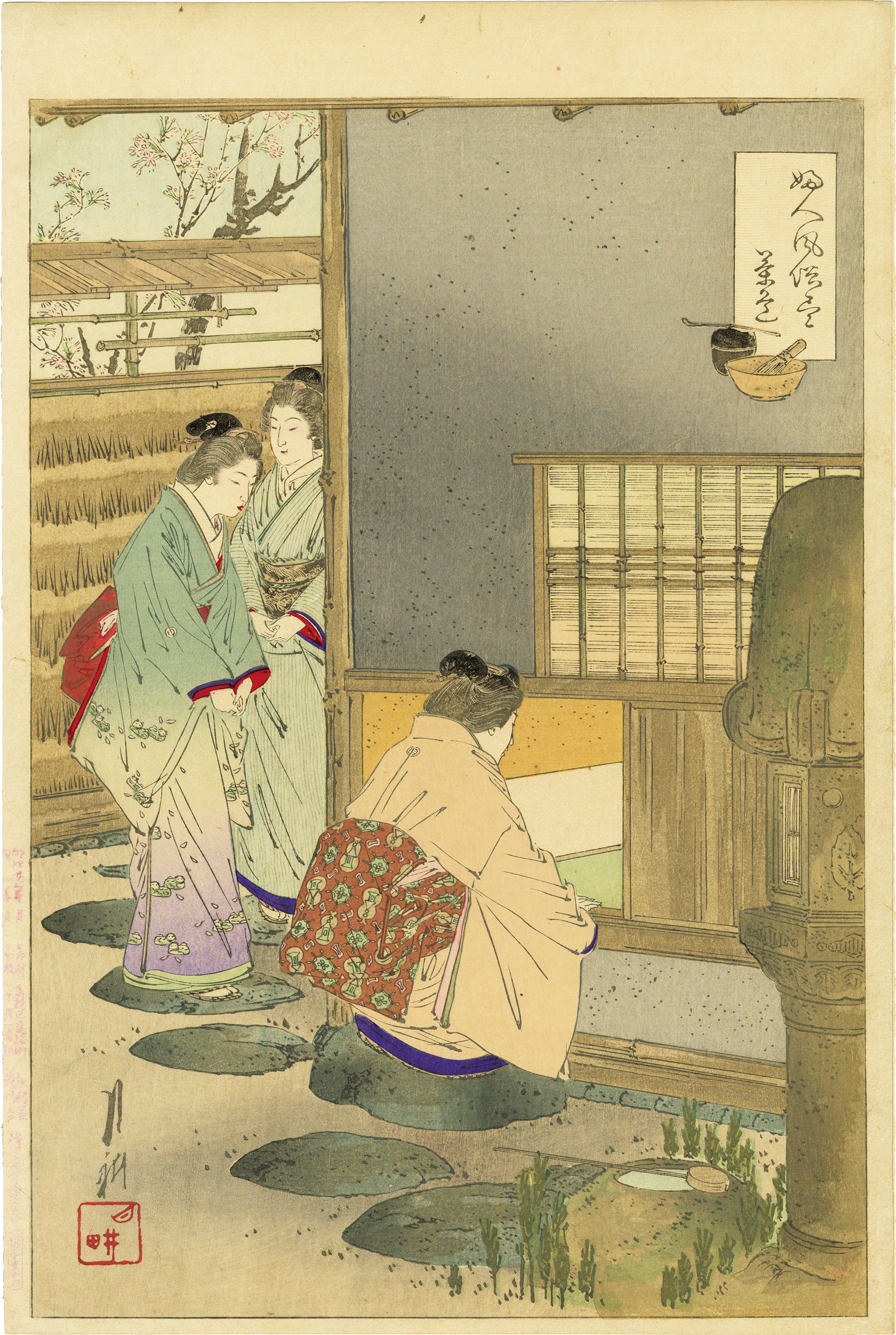

月耕 / 婦人風俗尽 茶室
SKU: C24165
スマートフォンのお客様は画像上でダブルタップすると拡大画像をご覧いただけます。
Please double-tap on the image to zoom up images.
作品
年代 : 明治24年
サイズ : 大判
刷 : 良
保存 : 良
詳細 : 裏打 / 少汚れ
ディレクターコメント
婦人風俗を丁寧に描いたシリーズ。
明治になり急激な西洋化が進むにつれ、茶の湯は衰退の一途をたどるが、それまで遊芸とされていた茶道を教養科目に組み込むことにより、近代的な茶道の基礎が築かれた。
本作ではにじり口より茶室に入る婦人達を描いている。にじり口は、「茶室の中では全ての人が平等である」という考えから千利休が考案した入り口である。にじり口はとても小さく、どのような身分の者であっても頭を下げ、武士も刀などを外す必要があった。
月耕は独学で絵を学び、輸出向けの陶器、漆器の下絵などを描いて画技を磨いた。そうした中で明治10年頃に征韓論の時事物浮世絵を自費出版して、少しずつ知られるようになる。明治15年頃より挿絵、口絵を手掛け、一躍人気絵師の仲間入りを果たした。
明治18年の「東京流行細見」に示された浮世絵師の細見では、7番目に挙げられている。浮世絵系の師弟関係の埒外にあり、しかもデビュー間もない時期であることを勘案すると、かなりの高評価といえる。
その後は人気絵師としての地位を確立して、各会においても一等褒状や銀杯、銅牌を重ねた。
作品ページの見方とご購入ガイド
Information
Date : 1891
Size : O-ban
Impression : Good
Condition : Good
Detail : Backed / Slight browning
The series depicts the ladies' customs and manners.
With the rapid westernization of Japan in the Meiji era, Cha-no-Yu, the traditional tea ceremony, continued to decline. However, by incorporating the tea ceremony, which had previously been considered a recreational art, into the liberal arts curriculum, the foundation for the modern tea ceremony was laid.
This work depicts ladies entering the tea room through the nijiriguchi door. The nijiriguchi is an entrance designed by Sen no Rikyu, who believed that all people are equal in the tea room. The nijiriguchi was so small that all persons of any rank had to bow their heads, and warriors also had to remove their swords.
Gekko learned the painting techniques by himself from the design work of the painting on the ceramic and lacquer. After the study, he started self-publishing in 1877, and it made him known little by little. From 1882, he started the work of Kuchi-e and illustration. After that, he became one of the most famous artists.
Also, he was rated in the 7th place of the Ukiyo-e artist on "Guide of the vogue of Tokyo" in 1885. Considering that he was a newcomer in the Ukiyo-e field, and also, the rank at the time was generally related to the connections between the teacher and pupils, it was an unusual reputation.
Shopping Guide & Information of the Japanese Prints
Please double-tap on the image to zoom up images.
作品
年代 : 明治24年
サイズ : 大判
刷 : 良
保存 : 良
詳細 : 裏打 / 少汚れ
ディレクターコメント
婦人風俗を丁寧に描いたシリーズ。
明治になり急激な西洋化が進むにつれ、茶の湯は衰退の一途をたどるが、それまで遊芸とされていた茶道を教養科目に組み込むことにより、近代的な茶道の基礎が築かれた。
本作ではにじり口より茶室に入る婦人達を描いている。にじり口は、「茶室の中では全ての人が平等である」という考えから千利休が考案した入り口である。にじり口はとても小さく、どのような身分の者であっても頭を下げ、武士も刀などを外す必要があった。
月耕は独学で絵を学び、輸出向けの陶器、漆器の下絵などを描いて画技を磨いた。そうした中で明治10年頃に征韓論の時事物浮世絵を自費出版して、少しずつ知られるようになる。明治15年頃より挿絵、口絵を手掛け、一躍人気絵師の仲間入りを果たした。
明治18年の「東京流行細見」に示された浮世絵師の細見では、7番目に挙げられている。浮世絵系の師弟関係の埒外にあり、しかもデビュー間もない時期であることを勘案すると、かなりの高評価といえる。
その後は人気絵師としての地位を確立して、各会においても一等褒状や銀杯、銅牌を重ねた。
作品ページの見方とご購入ガイド
Information
Date : 1891
Size : O-ban
Impression : Good
Condition : Good
Detail : Backed / Slight browning
The series depicts the ladies' customs and manners.
With the rapid westernization of Japan in the Meiji era, Cha-no-Yu, the traditional tea ceremony, continued to decline. However, by incorporating the tea ceremony, which had previously been considered a recreational art, into the liberal arts curriculum, the foundation for the modern tea ceremony was laid.
This work depicts ladies entering the tea room through the nijiriguchi door. The nijiriguchi is an entrance designed by Sen no Rikyu, who believed that all people are equal in the tea room. The nijiriguchi was so small that all persons of any rank had to bow their heads, and warriors also had to remove their swords.
Gekko learned the painting techniques by himself from the design work of the painting on the ceramic and lacquer. After the study, he started self-publishing in 1877, and it made him known little by little. From 1882, he started the work of Kuchi-e and illustration. After that, he became one of the most famous artists.
Also, he was rated in the 7th place of the Ukiyo-e artist on "Guide of the vogue of Tokyo" in 1885. Considering that he was a newcomer in the Ukiyo-e field, and also, the rank at the time was generally related to the connections between the teacher and pupils, it was an unusual reputation.
Shopping Guide & Information of the Japanese Prints
最近見た作品