


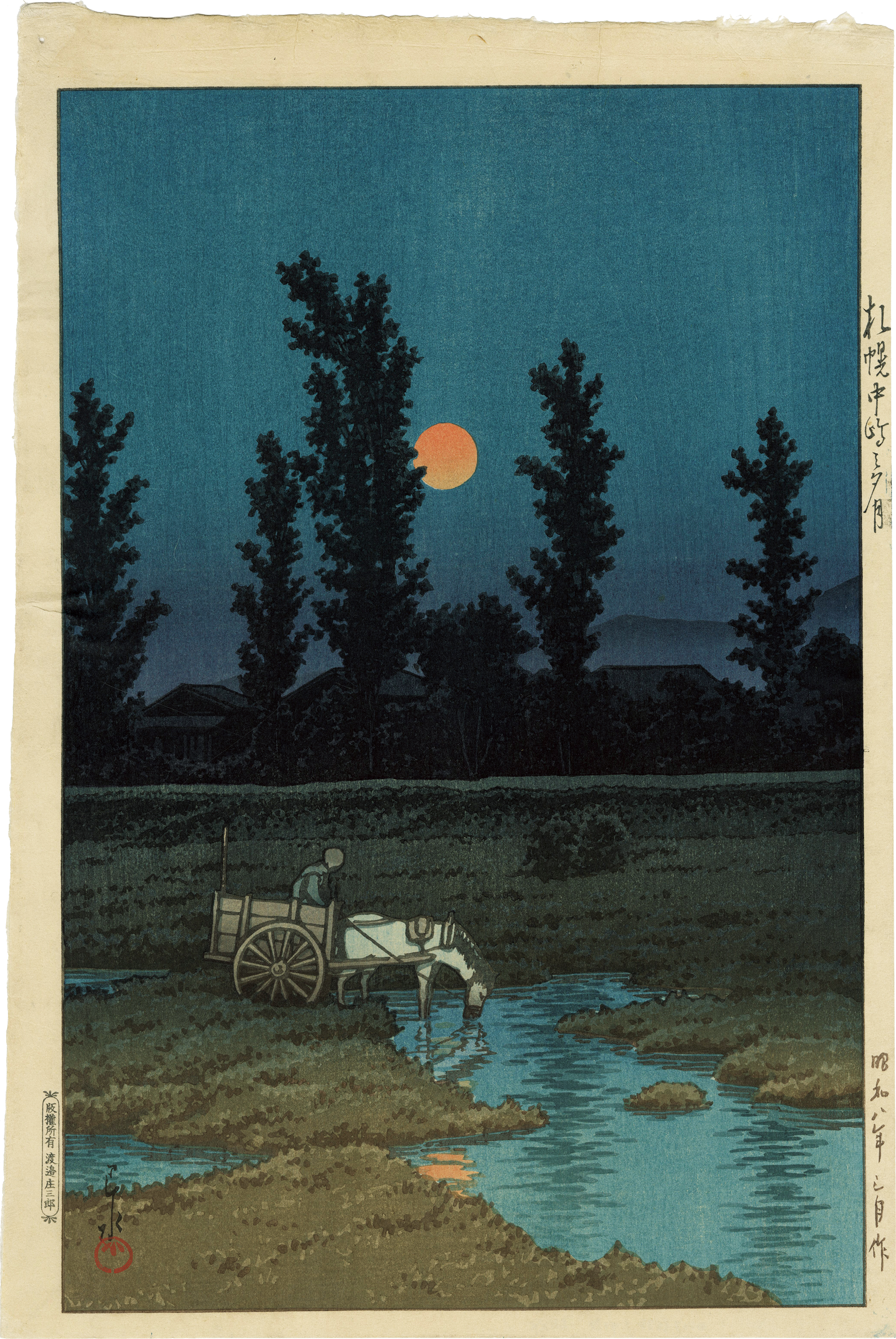

川瀬 巴水 / 札幌中嶋之夕月
SKU: C24218
スマートフォンのお客様は画像上でダブルタップすると拡大画像をご覧いただけます。
Please double-tap on the image to zoom up images.
作品
年代 : 昭和8年
サイズ : 大判
刷 : 優良
保存 : 良
詳細 : マージンに僅かな汚れ
ディレクターコメント
月の昇る夕暮れ、仕事を終えのどを潤す農用馬。労うように背を見つめる人間と馬の間には、共に仕事をする信頼関係のようなものも見える。
明治時代に始まった北海道の開拓の際、農用馬として6頭の馬が導入され、その後数を増やした。農業のみならず、運搬や切り株の引き抜き、さらに嫁入りの際の移動など多岐にわたって馬は活躍し、人々の仕事や生活に欠かせない存在となった。
川瀬巴水は元々日本画家として活躍していたが、大正7年に発表された伊東深水の木版画作品「近江八景」に感銘を受け版画家に転向した。
その後は新版画の第一人者として活躍し、約40年にわたる画業のなかで多くの版画作品を残し、その数は600点にも及ぶ。
巴水の特徴的な青色はその場の空気さえも宿す深い味わいを持ち、「巴水ブルー」と称される。
作品ページの見方とご購入ガイド
Information
Date : 1933
Size : O-ban
Impression : Very good
Condition : Good
Detail : Slight browning on margin
At dusk, a farm horse is thirsting after a day's work. We can see a relationship of trust between the human gazing at the horse's back and the horse as partners in working together.
When the development of Hokkaido began in the Meiji era, six horses were introduced to Hokkaido as farm horses, and their numbers have since increased. They were indispensable to people's work and daily lives, not only for farming but also for transporting, pulling out stumps, and, furthermore, sending off brides.
KAWASE Hasui was initially active as a Japanese painter but switched to printmaking artist by being impressed by ITO Shinsui's woodblock artwork "Eight Views of Omi," published in 1918.
After that, he became active as a leading artist in the Shinhanga field and left behind many print works in his 40 years of painting, numbering over 600.
Hasui's characteristic blue color is called "Hasui Blue" because it has a deep impression that even includes the atmosphere of the sketched places.
Shopping Guide & Information of the Japanese Prints
Please double-tap on the image to zoom up images.
作品
年代 : 昭和8年
サイズ : 大判
刷 : 優良
保存 : 良
詳細 : マージンに僅かな汚れ
ディレクターコメント
月の昇る夕暮れ、仕事を終えのどを潤す農用馬。労うように背を見つめる人間と馬の間には、共に仕事をする信頼関係のようなものも見える。
明治時代に始まった北海道の開拓の際、農用馬として6頭の馬が導入され、その後数を増やした。農業のみならず、運搬や切り株の引き抜き、さらに嫁入りの際の移動など多岐にわたって馬は活躍し、人々の仕事や生活に欠かせない存在となった。
川瀬巴水は元々日本画家として活躍していたが、大正7年に発表された伊東深水の木版画作品「近江八景」に感銘を受け版画家に転向した。
その後は新版画の第一人者として活躍し、約40年にわたる画業のなかで多くの版画作品を残し、その数は600点にも及ぶ。
巴水の特徴的な青色はその場の空気さえも宿す深い味わいを持ち、「巴水ブルー」と称される。
作品ページの見方とご購入ガイド
Information
Date : 1933
Size : O-ban
Impression : Very good
Condition : Good
Detail : Slight browning on margin
At dusk, a farm horse is thirsting after a day's work. We can see a relationship of trust between the human gazing at the horse's back and the horse as partners in working together.
When the development of Hokkaido began in the Meiji era, six horses were introduced to Hokkaido as farm horses, and their numbers have since increased. They were indispensable to people's work and daily lives, not only for farming but also for transporting, pulling out stumps, and, furthermore, sending off brides.
KAWASE Hasui was initially active as a Japanese painter but switched to printmaking artist by being impressed by ITO Shinsui's woodblock artwork "Eight Views of Omi," published in 1918.
After that, he became active as a leading artist in the Shinhanga field and left behind many print works in his 40 years of painting, numbering over 600.
Hasui's characteristic blue color is called "Hasui Blue" because it has a deep impression that even includes the atmosphere of the sketched places.
Shopping Guide & Information of the Japanese Prints
最近見た作品