


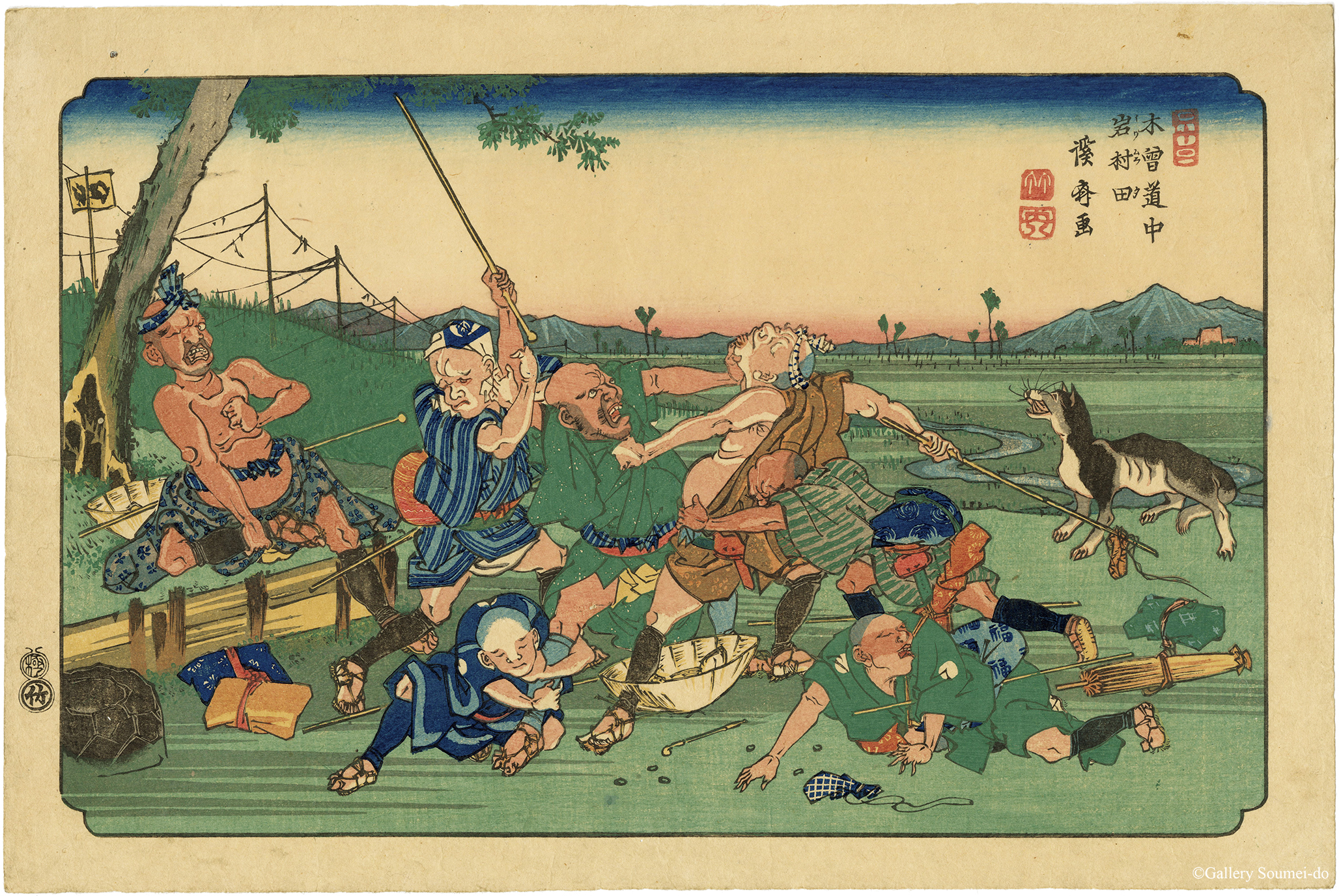
英泉 / 木曽街道六十九次 岩村田
SKU: C28046
タグ:
動物
スマートフォンのお客様は画像上でダブルタップすると拡大画像をご覧いただけます。
Please double-tap on the image to zoom up images.
作品
年代 : 天保8年頃
サイズ : 大判
刷 : 優良
保存 : 良
詳細 : 小虫穴補修
ディレクターコメント
東海道五十三次で成功した版元の保永堂は、天保6年に木曽街道六十九次の出版を企画する。第11図の本庄宿までは英泉が制作したが、その後は広重が加わり、版元も錦樹堂へ移行し、完成までに6年もの歳月がかかった。英泉の作品はシリーズ全71枚の内のわずか24枚である上に、初版より後の刷においては英泉の落款が削りとられている。
英泉は、師である英山が描くような儚げな女性の美人画を描いていたが、その後独自の妖艶な画風で人気を博することになる。
6頭身で胴長、猫背気味という、屈折した情念の籠った女性像が特徴である。英泉は深川のような岡場所や吉原遊廓の遊女を、妖艶さと強い意志を湛えた眼差しを持つ女性として描いた。江戸時代の後期、文化・文政期の退廃的な美意識を象徴的に表し、幕末の世情を反映したアクの強い画風を示している。
Information
Date : c. 1837
Size : O-ban
Impression : Very good
Condition : Good
Detail : Restored small wormholes
Hoeidō, the publisher that found success with the Fifty-three Stations of the Tōkaidō, planned the publication of the Sixty-nine Stations of the Kisokaidō in Tenpō 6 (1835). Eisen created the prints up to the 11th station, Honjō-juku, after which Hiroshige joined the project. The publishing rights also shifted to the firm Kinjudō, and the entire series took six years to complete.
Eisen contributed only 24 of the total 71 prints in the series. Furthermore, in later printings following the first edition, Eisen’s signature was removed from his works.
Eisen initially painted graceful and delicate portraits of women in the style of his teacher, Eizan. However, he later became famous for his distinctive and sensual artistic style.
His paintings are characterized by a six-headed, long-torsos, and slightly hunchbacked female figure, embodying a refracted emotion. Eisen portrayed courtesans from red-light districts like Fukagawa and the Yoshiwara as women with a seductive allure and strong, resolute gazes.
His work symbolically captured the decadent aesthetic of the late Edo period, particularly during the Bunka and Bunsei eras, and reflected the turbulent social atmosphere of the time with a bold and idiosyncratic style.
Please double-tap on the image to zoom up images.
作品
年代 : 天保8年頃
サイズ : 大判
刷 : 優良
保存 : 良
詳細 : 小虫穴補修
ディレクターコメント
東海道五十三次で成功した版元の保永堂は、天保6年に木曽街道六十九次の出版を企画する。第11図の本庄宿までは英泉が制作したが、その後は広重が加わり、版元も錦樹堂へ移行し、完成までに6年もの歳月がかかった。英泉の作品はシリーズ全71枚の内のわずか24枚である上に、初版より後の刷においては英泉の落款が削りとられている。
英泉は、師である英山が描くような儚げな女性の美人画を描いていたが、その後独自の妖艶な画風で人気を博することになる。
6頭身で胴長、猫背気味という、屈折した情念の籠った女性像が特徴である。英泉は深川のような岡場所や吉原遊廓の遊女を、妖艶さと強い意志を湛えた眼差しを持つ女性として描いた。江戸時代の後期、文化・文政期の退廃的な美意識を象徴的に表し、幕末の世情を反映したアクの強い画風を示している。
Information
Date : c. 1837
Size : O-ban
Impression : Very good
Condition : Good
Detail : Restored small wormholes
Hoeidō, the publisher that found success with the Fifty-three Stations of the Tōkaidō, planned the publication of the Sixty-nine Stations of the Kisokaidō in Tenpō 6 (1835). Eisen created the prints up to the 11th station, Honjō-juku, after which Hiroshige joined the project. The publishing rights also shifted to the firm Kinjudō, and the entire series took six years to complete.
Eisen contributed only 24 of the total 71 prints in the series. Furthermore, in later printings following the first edition, Eisen’s signature was removed from his works.
Eisen initially painted graceful and delicate portraits of women in the style of his teacher, Eizan. However, he later became famous for his distinctive and sensual artistic style.
His paintings are characterized by a six-headed, long-torsos, and slightly hunchbacked female figure, embodying a refracted emotion. Eisen portrayed courtesans from red-light districts like Fukagawa and the Yoshiwara as women with a seductive allure and strong, resolute gazes.
His work symbolically captured the decadent aesthetic of the late Edo period, particularly during the Bunka and Bunsei eras, and reflected the turbulent social atmosphere of the time with a bold and idiosyncratic style.
最近見た作品
