


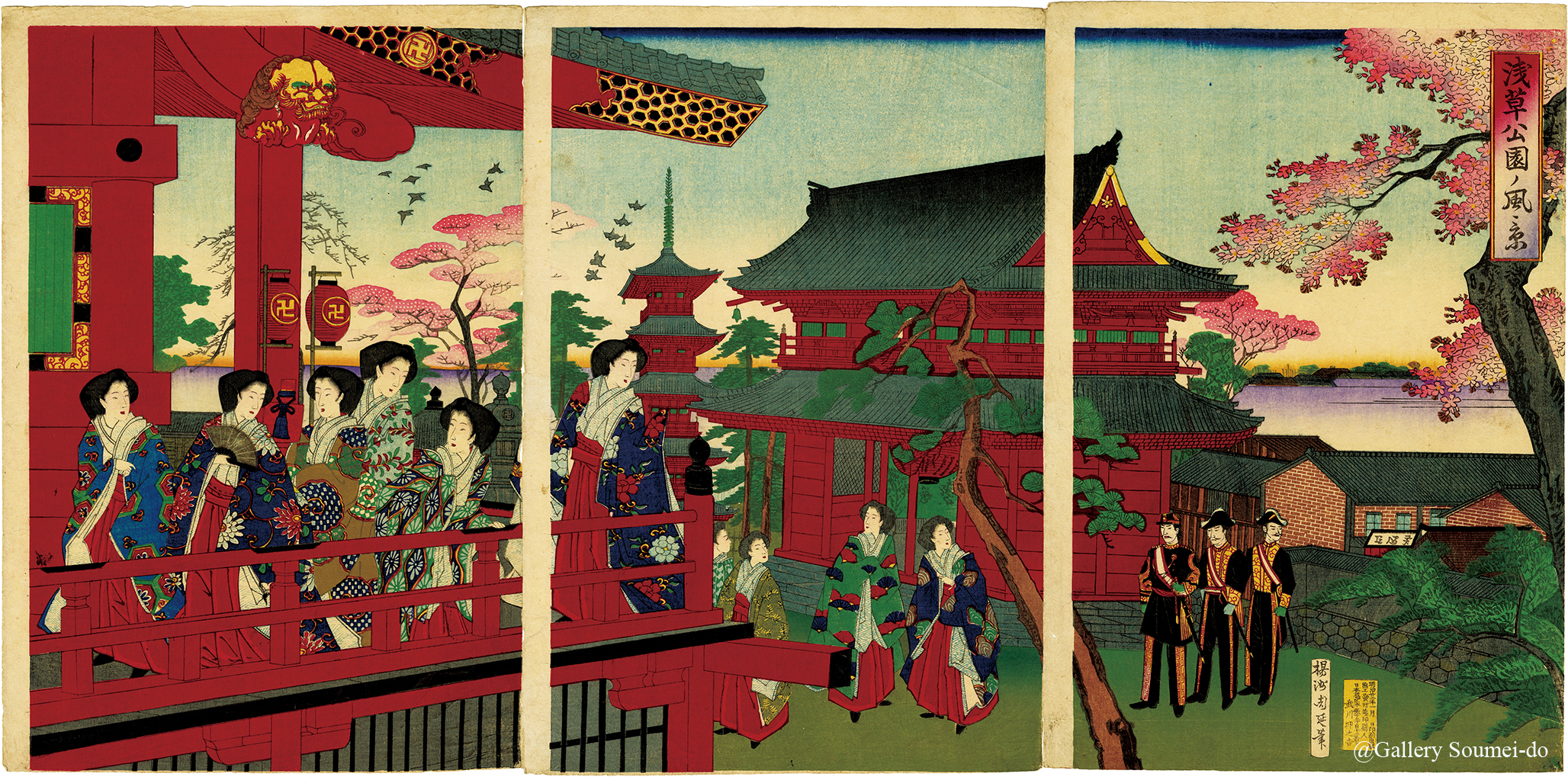
周延 / 浅草公園ノ風景
SKU: C29146-10
価格
¥30,000
スマートフォンのお客様は画像上でダブルタップすると拡大画像をご覧いただけます。
Please double-tap on the image to zoom up images.
作品
年代 : 明治22年
サイズ : 大判3枚続
刷 : 良
保存 : 良
詳細 : 少汚れ / マージンに小虫穴
ディレクターコメント
朗らかに談笑する女性たちの姿が実に華やかで、それらを手前左端に配した大胆な構図が印象的である。春の浅草寺のにぎわいや明るい雰囲気が伝わってくる一枚。
周延は国芳に絵を学んで芳鶴二代を名乗るが、国芳の死後は豊国三代につき、さらに豊国三代が亡くなると国周に転じて周延と号した。
明治に入ると当初は武者絵や西南戦争の絵を描いて評判を取る。その後は江戸っ子が知らない、江戸城大奥の風俗画や明治開化期の婦人風俗画などを描き、江戸浮世絵の再来と大変な人気を博した。これにより、周延は明治期で一番人気の美人画絵師となっている。
作品ページの見方とご購入ガイド
Information
Date : 1889
Size : O-ban / Triptych
Impression : Good
Condition : Good
Detail : Slight browning / Small wormholes on margin
The brightly dressed women engaged in cheerful conversation create a striking impression, especially with their placement at the front left of the composition. This bold arrangement conveys the lively atmosphere and vibrant spirit of Sensō-ji in spring.
Chikanobu initially studied under Kuniyoshi and took the name Yoshitsuru II. After Kuniyoshi’s death, he became a pupil of Toyokuni III, and upon Toyokuni III’s passing, he turned to Kunichika and adopted the art name Chikanobu.
In the early Meiji period, he gained fame for his warrior prints and prints depicting the Seinan War. Later, he produced genre scenes of the Edo Castle Ōoku (the shogun’s harem) and images of women and their fashions during the early Meiji modernization. These works were hugely popular, hailed as a revival of Edo ukiyo-e. As a result, Chikanobu became the most popular bijin-ga (pictures of beautiful women) artist of the Meiji era.
Shopping Guide & Information
Please double-tap on the image to zoom up images.
作品
年代 : 明治22年
サイズ : 大判3枚続
刷 : 良
保存 : 良
詳細 : 少汚れ / マージンに小虫穴
ディレクターコメント
朗らかに談笑する女性たちの姿が実に華やかで、それらを手前左端に配した大胆な構図が印象的である。春の浅草寺のにぎわいや明るい雰囲気が伝わってくる一枚。
周延は国芳に絵を学んで芳鶴二代を名乗るが、国芳の死後は豊国三代につき、さらに豊国三代が亡くなると国周に転じて周延と号した。
明治に入ると当初は武者絵や西南戦争の絵を描いて評判を取る。その後は江戸っ子が知らない、江戸城大奥の風俗画や明治開化期の婦人風俗画などを描き、江戸浮世絵の再来と大変な人気を博した。これにより、周延は明治期で一番人気の美人画絵師となっている。
作品ページの見方とご購入ガイド
Information
Date : 1889
Size : O-ban / Triptych
Impression : Good
Condition : Good
Detail : Slight browning / Small wormholes on margin
The brightly dressed women engaged in cheerful conversation create a striking impression, especially with their placement at the front left of the composition. This bold arrangement conveys the lively atmosphere and vibrant spirit of Sensō-ji in spring.
Chikanobu initially studied under Kuniyoshi and took the name Yoshitsuru II. After Kuniyoshi’s death, he became a pupil of Toyokuni III, and upon Toyokuni III’s passing, he turned to Kunichika and adopted the art name Chikanobu.
In the early Meiji period, he gained fame for his warrior prints and prints depicting the Seinan War. Later, he produced genre scenes of the Edo Castle Ōoku (the shogun’s harem) and images of women and their fashions during the early Meiji modernization. These works were hugely popular, hailed as a revival of Edo ukiyo-e. As a result, Chikanobu became the most popular bijin-ga (pictures of beautiful women) artist of the Meiji era.
Shopping Guide & Information
最近見た作品
