


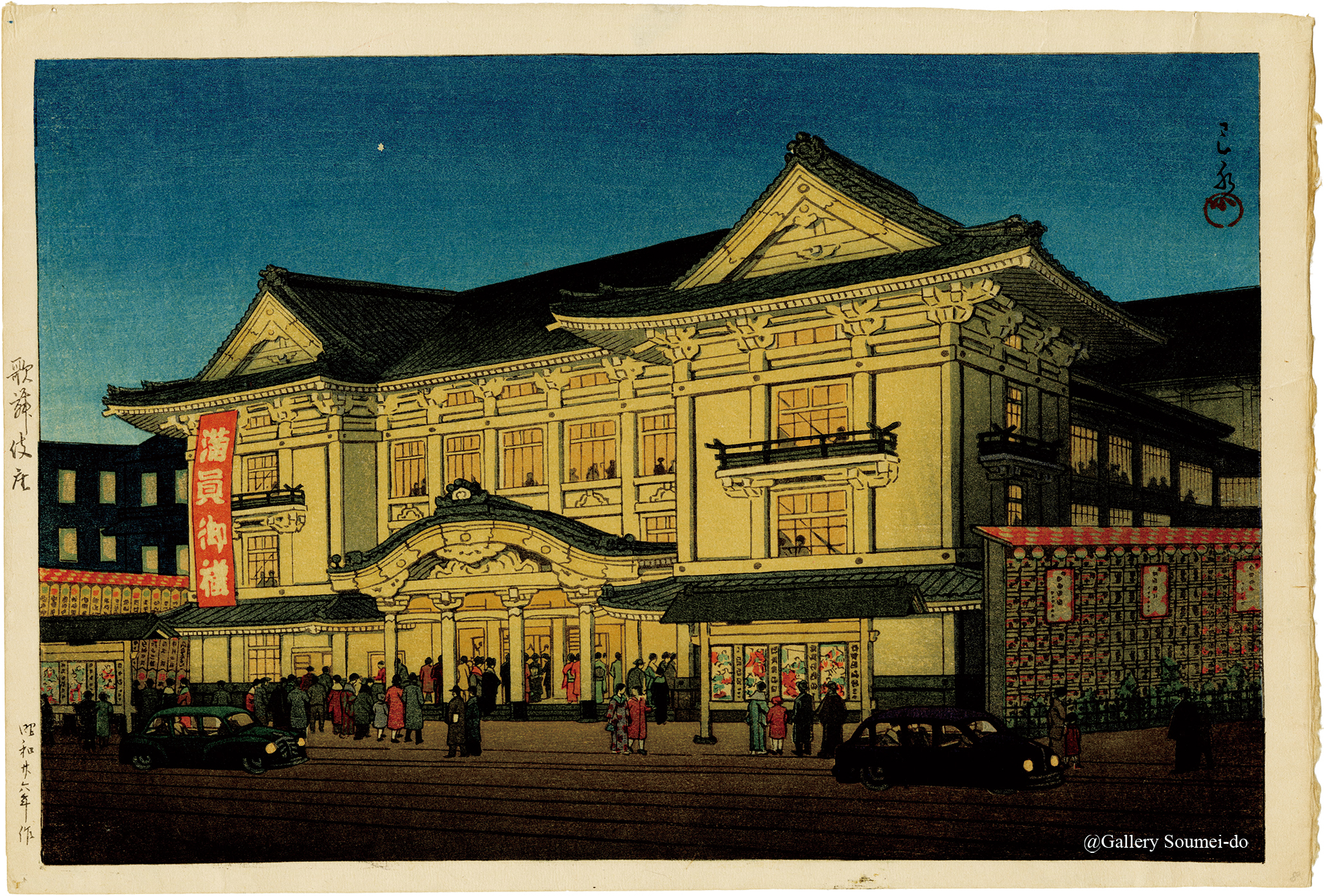
川瀬 巴水 / 歌舞伎座
SKU: C29215
タグ:
夜景
スマートフォンのお客様は画像上でダブルタップすると拡大画像をご覧いただけます。
Please double-tap on the image to zoom up images.
作品
年代 : 昭和26年
サイズ : 大判
刷 : 優良
保存 : 良
詳細 : -
ディレクターコメント
昭和26年は、空襲により焼失した歌舞伎座が再建された年。きらびやかな明かりが灯る劇場には、観劇を待ち望んでいた人々が集まり、賑わいを見せている。夜空を見上げると、静かに輝く一番星が。
戦後の復興を象徴する一枚である。
川瀬巴水は元々日本画家として活躍していたが、大正7年に発表された伊東深水の木版画作品「近江八景」に感銘を受け版画家に転向した。
その後は新版画の第一人者として活躍し、約40年にわたる画業のなかで多くの版画作品を残し、その数は600点にも及ぶ。
巴水の特徴的な青色はその場の空気さえも宿す深い味わいを持ち、「巴水ブルー」と称される。
作品ページの見方とご購入ガイド
Information
Date : 1951
Size : O-ban
Impression : Very good
Condition : Good
Detail : -
In 1951, the Kabuki-za Theatre, which had been destroyed in an air raid, was rebuilt.
Under the brilliant lights of the theater, crowds of people eager to enjoy performances have gathered once again. Looking up at the night sky, a single star shines quietly above.
This work symbolizes the postwar reconstruction of Japan.
KAWASE Hasui was initially active as a Japanese painter but switched to printmaking artist by being impressed by ITO Shinsui's woodblock artwork "Eight Views of Omi," published in 1918.
After that, he became active as a leading artist in the Shinhanga field and left behind many print works in his 40 years of painting, numbering over 600.
Hasui's characteristic blue color is called "Hasui Blue" because it has a deep impression that even includes the atmosphere of the sketched places.
Shopping Guide & Information of the Japanese Prints
Please double-tap on the image to zoom up images.
作品
年代 : 昭和26年
サイズ : 大判
刷 : 優良
保存 : 良
詳細 : -
ディレクターコメント
昭和26年は、空襲により焼失した歌舞伎座が再建された年。きらびやかな明かりが灯る劇場には、観劇を待ち望んでいた人々が集まり、賑わいを見せている。夜空を見上げると、静かに輝く一番星が。
戦後の復興を象徴する一枚である。
川瀬巴水は元々日本画家として活躍していたが、大正7年に発表された伊東深水の木版画作品「近江八景」に感銘を受け版画家に転向した。
その後は新版画の第一人者として活躍し、約40年にわたる画業のなかで多くの版画作品を残し、その数は600点にも及ぶ。
巴水の特徴的な青色はその場の空気さえも宿す深い味わいを持ち、「巴水ブルー」と称される。
作品ページの見方とご購入ガイド
Information
Date : 1951
Size : O-ban
Impression : Very good
Condition : Good
Detail : -
In 1951, the Kabuki-za Theatre, which had been destroyed in an air raid, was rebuilt.
Under the brilliant lights of the theater, crowds of people eager to enjoy performances have gathered once again. Looking up at the night sky, a single star shines quietly above.
This work symbolizes the postwar reconstruction of Japan.
KAWASE Hasui was initially active as a Japanese painter but switched to printmaking artist by being impressed by ITO Shinsui's woodblock artwork "Eight Views of Omi," published in 1918.
After that, he became active as a leading artist in the Shinhanga field and left behind many print works in his 40 years of painting, numbering over 600.
Hasui's characteristic blue color is called "Hasui Blue" because it has a deep impression that even includes the atmosphere of the sketched places.
Shopping Guide & Information of the Japanese Prints


